
VerbMaster Teacher Guide
Every teacher wants their students to actually remember what they've learned — not just for the test, but for real language use. Yet for many students, Spanish verbs become the wall they keep hitting year after year. Before we can fix this problem, though, we have to understand why it happens.
It's the start of a new school year, and you're reviewing verb conjugations. Within minutes, you see it — blank stares, confusion, and hesitant guesses.
The some students who learned all of these conjugations last spring now look at you like they've never seen hablar before.
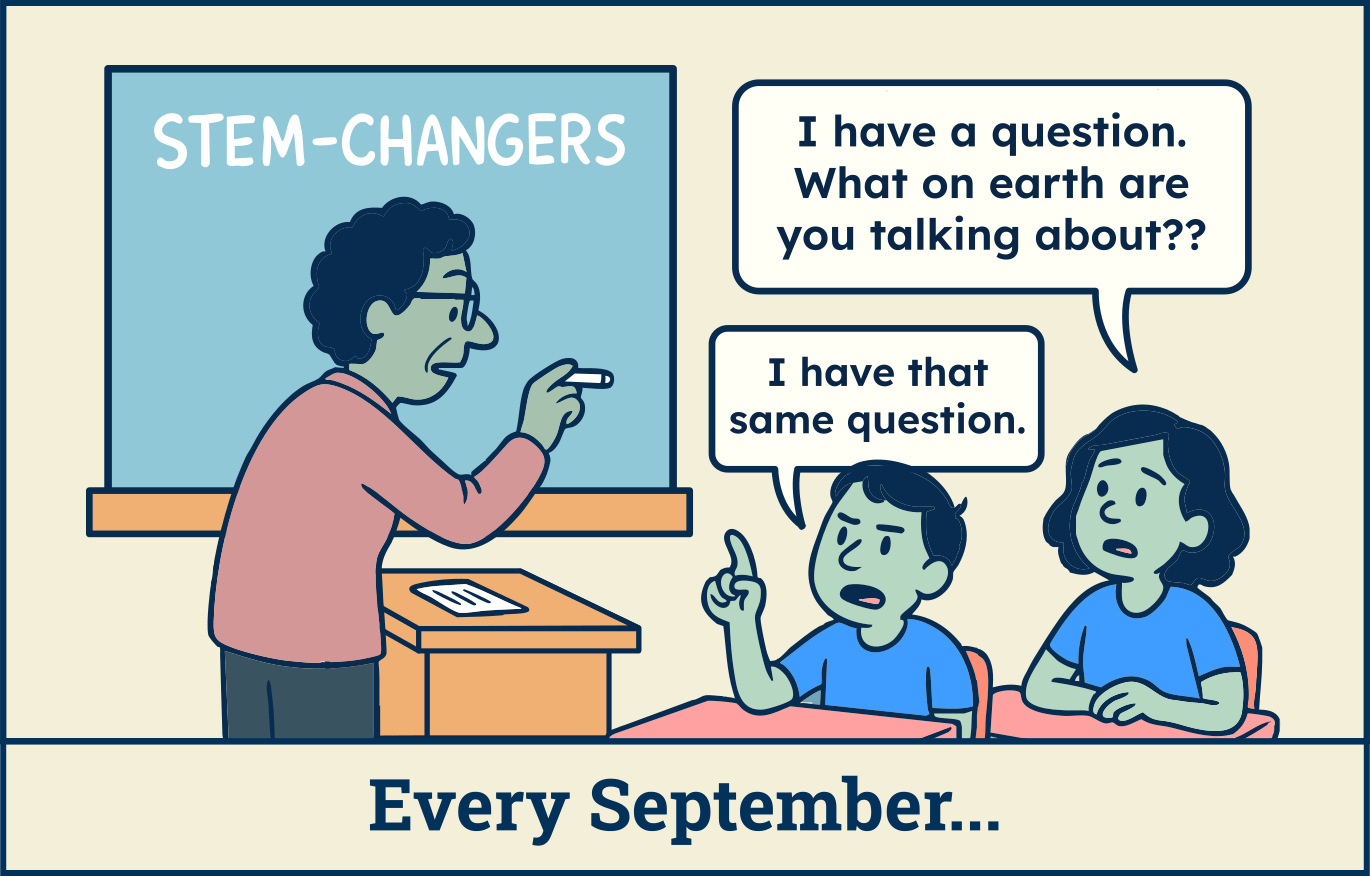
You joke about it:
"Every September my Year 3s look at me like I have three heads when I bring up stem-changers."
But underneath the laugh is real frustration.
You work hard. They work hard.
And yet, every fall feels like starting from zero.
Verbs aren't just tricky — they're uniquely difficult for your students.
And that difficulty doesn't just slow progress; it blocks the deeper, communicative work you actually want to do.
It's frustrating — but also widely accepted, because deep down, we all know it's incredibly difficult to fix.
In language, some components are relatively simple:
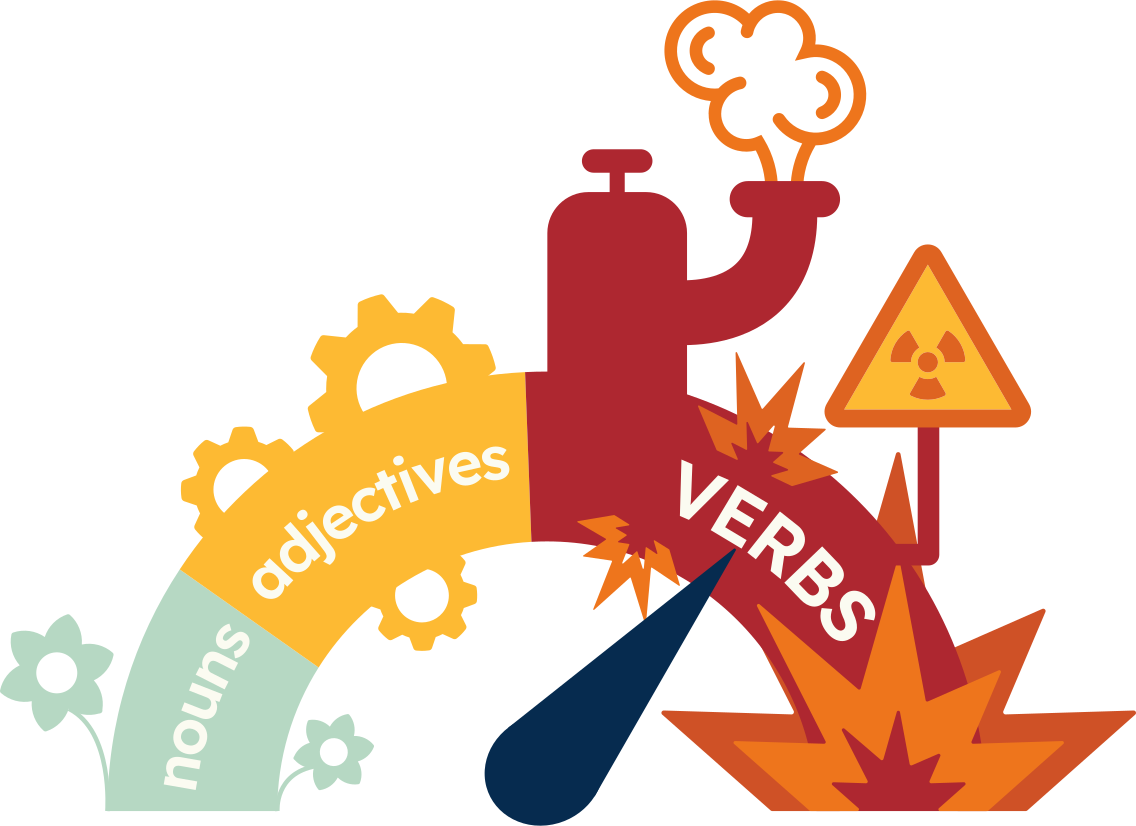
Nouns are usually one-to-one mapping. Book becomes libro. While some nouns have gendered forms like gato/gata, these changes are relatively simple and easy to pick up.
Adjectives add a bit more: Students have to think about gender and number agreement, but the patterns are usually consistent and predictable.
Verbs are on a whole different level of complexity.
A single verb can have over 40 different forms — and that's just the start.
Each verb draws on multiple layers of complexity:
And the real challenge?
These layers don't work in isolation. They stack and overlap, compounding to make verb conjugation one of the most complex challenges in all of language learning.
Chunking is the act of breaking complexity down into manageable pieces.
A heuristic is a rule or shortcut that helps with problem solving.
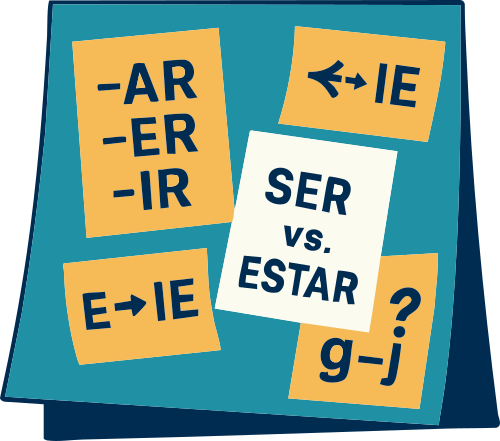
In practice, that looks like:
And we absolutely should do this. Chunking is essential for early learning — it gives students something to hold onto.
But here's the catch: these tools are meant to be bridges, not destinations.
To see why, we need to look at how memory actually works, we need to distinguish between working memory and long-term memory.
Working Memory
is your mental scratchpad — it's what you can hold in your mind right now.
It has a very limited capacity—only 4 to 7 chunks of information at a time.
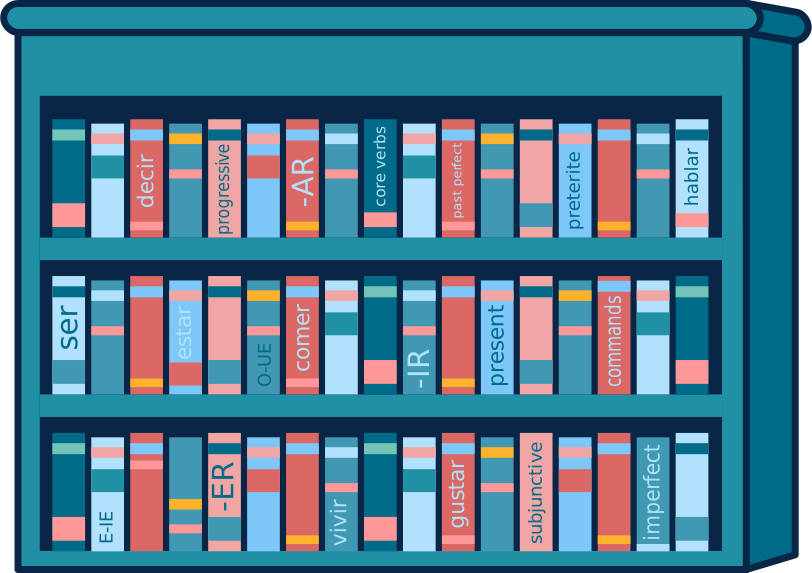
Long-Term Memory
is where knowledge lives once it's fully learned.
It has a massive capacity, but it takes effort and repetition to store things there.
The key takeaway here is that working memory is EXTREMELY LIMITED.
And when students rely on charts or mnemonics, they're stuck operating in that limited space.
This brings us to the idea of cognitive load.
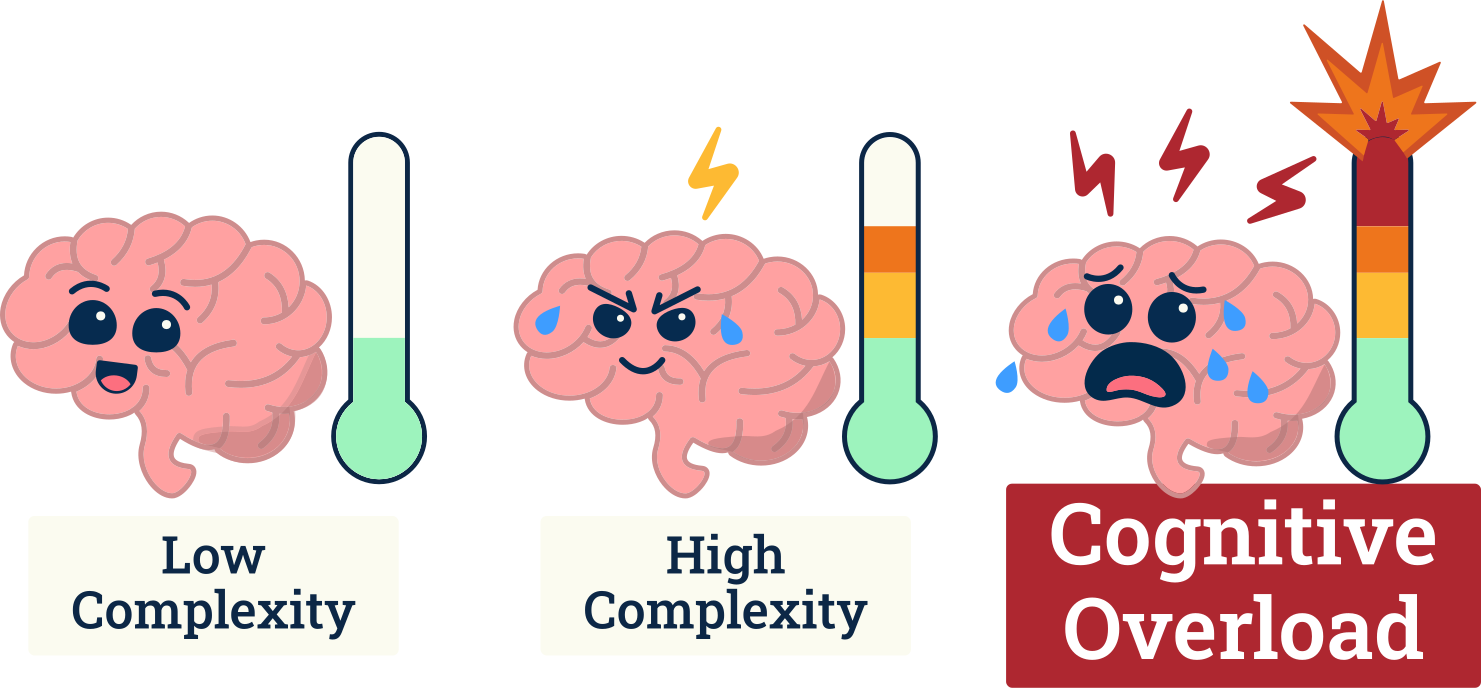
Cognitive load is the mental effort required in working memory to understand or process information.
Some cognitive load is totally fine — in fact, it's necessary for learning.
What's not okay is when the complexity goes beyond what working memory can handle.
That's when we hit COGNITIVE OVERLOAD — when learning stalls and performance breaks down.
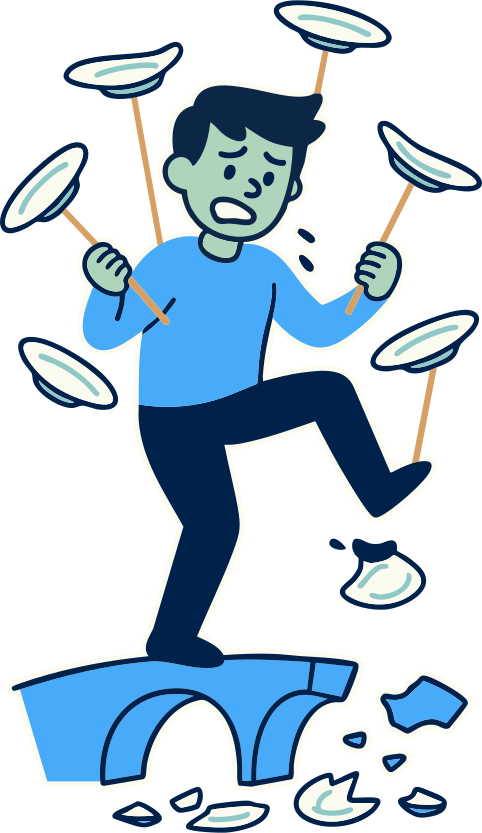
Now let's bring this back to verbs and heuristics.
It's not that heuristics are bad — they're essential at the start. But they can't carry students through real communication.
Because when a student is:
They're funneling through finite working memory. Before long, they hit overload — a traffic jam in the brain.
That traffic jam blocks the path not just to conjugation, but to smooth, automatic use and comprehension of the language.
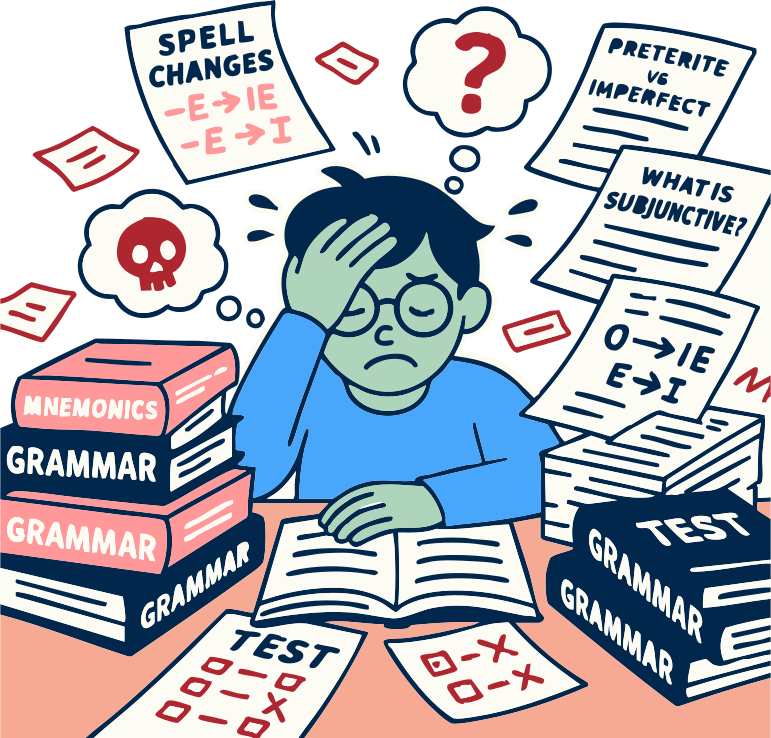
Even when students do learn the rules, they often forget them over the summer or even right after the quiz.
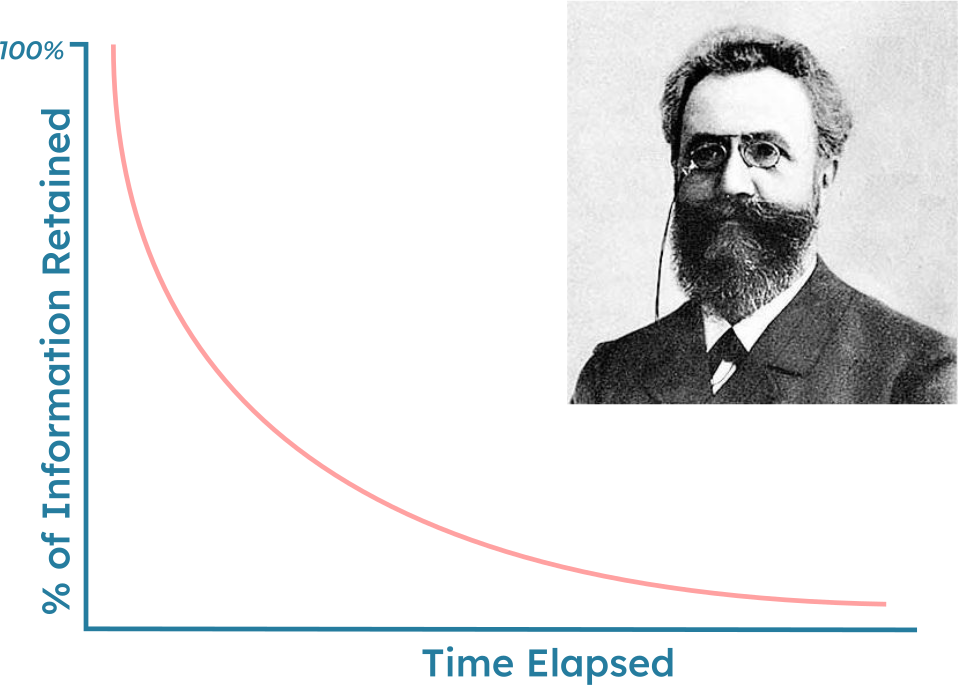
This is the Forgetting Curve, discovered by Hermann Ebbinghaus in the 1880s.
It illustrates how quickly new information fades after initially learning something.
In short, without sustained reinforcement, most newly learned material, even heavily studied material, simply fades away.
And that's why you so frequently hear the refrain:
"I took 4 years of Spanish, and I remember nothing."
It can feel that way. All the effort, all the practice — and the forgetting curve still wins. If this were the whole story, lasting fluency just wouldn't be possible in a normal classroom.
Fortunately, it isn't the whole story. Decades of cognitive science research have shown us exactly how to move knowledge out of fragile working memory and into durable long-term memory — and how to do it within the limits of a real school year.
And once that happens — everything changes.
Pass this to complete the module. The questions you miss come back around.